What does it mean to prepare young women to succeed at school and flourish in life?
For Mr Simon Townley, Queenwood’s Director of Student Engagement (Year 10-12), the answer begins long before a student encounters difficulty. Wellbeing is woven into everyday school life: through relationships, learning, challenge, belonging and the gradual development of independence.
“We try not to think about wellbeing simply as something we respond to when a student is struggling,” Townley says. “The more powerful work happens much earlier: creating the conditions in which girls and young women feel connected, known, challenged and able to ask for help.”
At Queenwood, this approach is embedded across the K–12 experience and grounded in the school’s values of truth, courage and service. Students are supported by teachers, tutors, year level coordinators, learning enhancement staff and counselling services, with external professionals involved when appropriate.
Listening to students is central to the approach. Across Years 7–12, regular engagement surveys explore students’ experiences of belonging, relationships, learning, agency and engagement. Tutors follow up on the concerns and patterns that emerge, helping staff respond early rather than waiting for difficulties to become crises.
Resilience is built, not prescribed
Townley believes resilience is developed through experience. Queenwood’s Character Education Program does not seek to remove every obstacle from a young person’s path, rather to help students develop the capacity to respond when things inevitably go wrong.
“Resilience is not simply telling a young person to ‘toughen up’,” he says. “It involves learning to recognise emotions, tolerate some discomfort, regulate a response, seek help where appropriate and then decide what to do next.”
This approach sits alongside Queenwood’s high academic expectations. Academic performance and wellbeing are understood as mutually sustaining. Queenwood’s motto, Per aspera, Ad astra (through struggles to the stars), reflects the belief that challenge can be both demanding and deeply formative.
The distinction, Townley says, is between healthy challenge and unhealthy pressure. Students need opportunities to undertake demanding work, make mistakes, receive meaningful feedback and discover that sustained effort can lead to improvement, without believing that achievement determines their worth.
Psychological safety is an important part of this. A safe classroom is not necessarily one where students are always comfortable. but one where they feel able to take intellectual risks: ask questions, admit confusion, offer an imperfect idea, disagree respectfully and learn from mistakes.
“We want students to understand that it is perfectly acceptable to say, ‘I don’t know yet’,” Townley says. “They can make a mistake, change their mind and try again.”
Growing into independence
As students mature, Queenwood’s approach to wellbeing develops with them. Younger students are supported through strong relationships with teachers and families, with an emphasis on belonging, empathy and curiosity. Older students are increasingly encouraged to develop independence, identity, self-regulation, leadership, purpose and contribution.
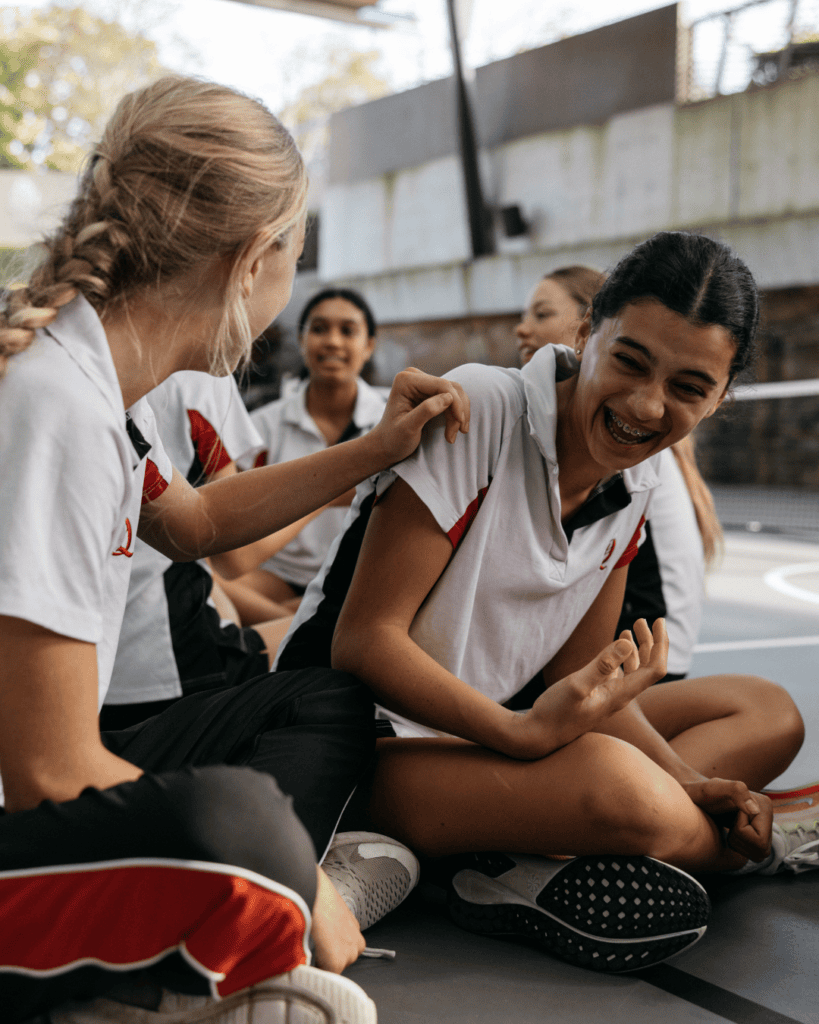
Peer relationships are an important part of this progression. Buddy programs, Year 10 Peer Support leaders working with Year 7 students, and vertical tutor groups give students opportunities to receive support,while also taking responsibility for others.
For Townley, that transition is fundamental.
“We want students to move from thinking only, ‘Who will support me?’ towards asking, ‘How can I support someone else?’”
Wellbeing beyond the classroom
At Queenwood, wellbeing extends well beyond a weekly lesson. Sport, music, drama, debating, outdoor education, service learning and student leadership provide opportunities to develop perseverance, collaboration, self-management and responsibility.
The goal is not simply to equip students with strategies for difficult moments. It is to develop the self-knowledge, agency and judgement they need to navigate life with confidence.
“Success matters,” Townley says, “but education is ultimately about something larger: developing young women with the character and capability to both flourish themselves and contribute meaningfully to the lives of others.”